



Hiking Gear for London Weekend Trips: 2026 List
Last Updated: October 23, 2026
Quick Summary
For London weekend trips, hiking gear should start with three items: a 20 to 30 litre pack for a day walk, low-cut shoes with good grip, and a packable waterproof shell. Pack for the walking day rather than the travel day, and keep a day pack under 7kg before water.
- A day walk needs a 20 to 30 litre pack; an overnight trip moves to 30 to 40 litres.
- Carry at least one litre of water for a half-day walk and 1.5 to 2 litres for a full summer day.
- Spend on footwear and your waterproof shell, go mid-range on the pack, and keep accessories cheap.
- A 40-litre pack fits under a train seat, while a 60-litre expedition bag does not.
- A complete day-trip kit of shoes, socks, shell, pack, first aid and bottle comes to £143.70.
Table of Contents
- Hiking Gear for London Weekend Trips: What Actually Earns Its Place
- The Weekend Hiking Packing List (Start Here)
- How to Choose Hiking Boots and Shoes That Survive a Wet Weekend
- What to Wear Hiking in Rainy Weather: Layering That Works
- The Best Day Hiking Backpack for Train-and-Trail Weekends
- Packing for Public Transport: The Commute-to-Trail Test
- Budget Tiers and Value Picks: What to Spend Where
- Conclusion
- Frequently Asked Questions
Hiking Gear for London Weekend Trips: What Actually Earns Its Place
Most people overpack for a weekend outdoors and underpack for the weather. That is the core problem with hiking gear for London weekend trips, and it is worth solving before you spend a penny.
The goal is simple. You want a pack you can carry onto a train, a jacket that handles a sudden shower, and footwear that survives a muddy path without wrecking your feet.
Day Trip or Overnight? Pack for the Trip You're Actually Taking
A day hike needs roughly half the kit of an overnight trip, and the difference shows up in bag size and footwear. Day trips suit a lighter pack and low-cut shoes. Overnight trips need spare layers, a wash kit and a bigger bag.
Be honest about which one you are doing. Most weekend trips involve one travel day and one walking day, so pack for the walking day and keep the rest minimal.
The Weekend Hiking Packing List (Start Here)
A weekend hiking packing list is short when you strip it back: one pack, one waterproof layer, one warm mid layer, spare socks, water, snacks, a small first aid kit and a charged phone. Everything else is optional.
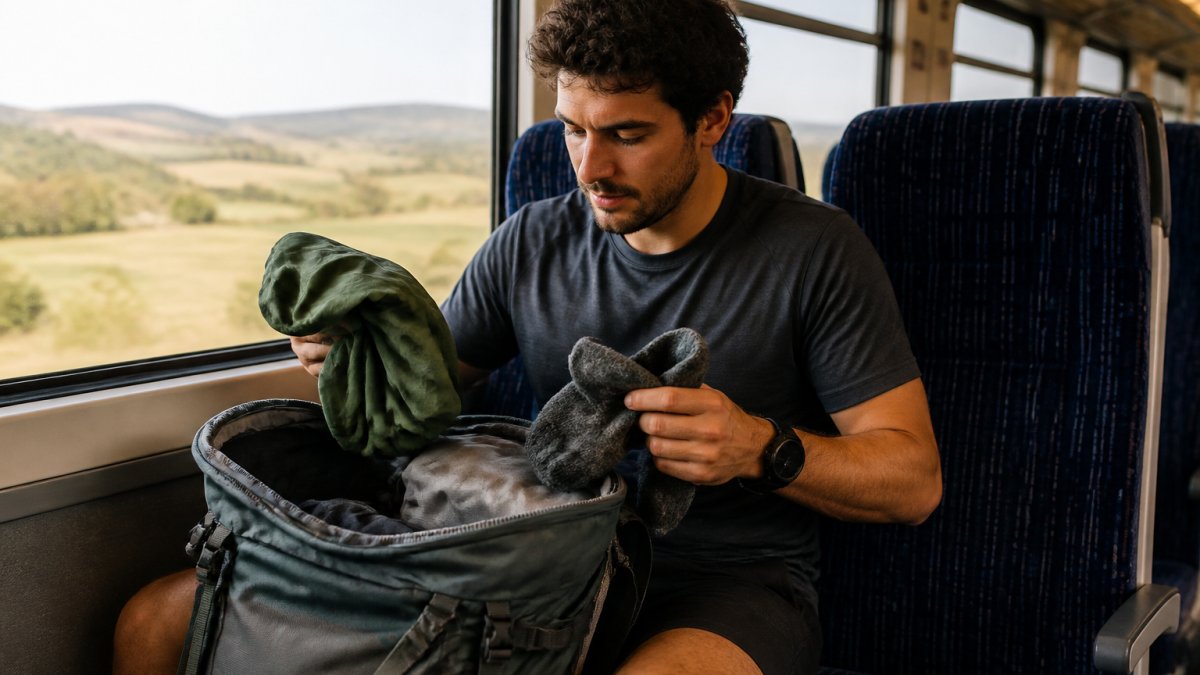
Day Trip Versus Overnight: Two Different Lists
A day trip from a train station or a bus stop needs roughly half the kit of an overnight trip, and the difference shows up in bag size, footwear and how much you carry on your back between transport and trail.
Most weekend trips involve one travel day and one walking day, so pack for the walking day and keep the rest minimal. If you are staying in a hostel or a friend's place, you do not need camping kit at all.
The Core List, With Quantities
Here is the list we would actually take for a day walk, with realistic quantities:
- Pack: 20 to 30 litres for a day, 30 to 40 litres for an overnight
- Waterproof shell: one packable jacket or poncho, around 200 to 400g
- Warm layer: one fleece or insulated mid layer, around 300 to 500g
- Socks: two pairs, thick and dry, with one pair reserved for the return journey
- Water: at least one litre for a half-day walk, 1.5 to 2 litres for a full day in summer
- Food: high-energy snacks plus a proper lunch, roughly 500 to 800 calories for a half day
- First aid: plasters, blister plasters, wipes, and any personal medication
- Navigation: offline map on your phone plus a power bank, or a paper map and compass if you prefer not to rely on a battery
- Extras for overnight: wash kit, spare baselayer, headtorch, dry bag
That is it. A common mistake is adding "just in case" items until the bag weighs more than it should. If you have not used something on two trips, leave it behind next time. A useful rule of thumb is to keep a day pack under 7kg and an overnight pack under 12kg before water, which keeps you comfortable on trains, buses and long descents.
How to Choose Hiking Boots and Shoes That Survive a Wet Weekend
Learning how to choose hiking boots comes down to three things: fit, grip and how fast they dry. A wet weekend punishes poor grip and slow-drying material, so prioritise those over brand names.
Low-cut shoes suit most weekend trips and train travel because they are lighter and easier to pack. Our Quick-Dry Non-Slip Outdoor Hiking Shoes (£25.95) use a breathable mesh upper and a non-slip rubber outsole for soil, grass and hard paths.

Socks matter as much as the shoe. Our Thick Terry Hiking Socks (£10.95) have a thick terry sole and a high tube that keeps grit out and reduces rubbing. Buy two pairs and rotate them.
What to Wear Hiking in Rainy Weather: Layering That Works
Knowing what to wear hiking in rainy weather is a layering question, not a shopping question.
A packable shell is the single most useful item you own. Our Lightweight Waterproof Outdoor Jacket (£34.95) is a single-layer waterproof and windproof shell that packs into the lid of a rucksack.

If you want a lighter, cheaper option for a day bag, the Outdoor Rain Poncho (£27.95) is waterproof, windproof and weighs around 200 to 300g. It works across all four seasons.
| Layer | What It Does | Our Pick |
|---|---|---|
| Base layer | Moves sweat away from skin | Any wicking top |
| Mid layer | Traps warmth on stops | Fleece or insulated layer |
| Shell | Blocks rain and wind | Lightweight waterproof jacket |
| Extremities | Keeps hands and head warm | Hat and thin gloves |
The Best Day Hiking Backpack for Train-and-Trail Weekends
The best day hiking backpack for a weekend trip is one that fits under a train seat and still holds a full day's kit.

Our 40L Hiking Backpack (£39.95) is the size we recommend buying first.
If you want something softer and lighter for a day trip, the Outdoor Hiking Backpack in Water-Repellent Nylon (£32.95) is a simple soft-construction daypack.
Packing for Public Transport: The Commute-to-Trail Test
Packing for public transport changes what gear makes sense. Anything that cannot go under a seat, onto a rack or through a ticket barrier without a fight is the wrong choice for a train-and-trail weekend.
Run this test before you leave:
- Pack fits under a train seat or on the overhead rack
- Bag has no loose straps that catch on doors or seats
- Waterproof layer is accessible without unpacking the whole bag
- Shoes are clean enough for a carriage
- Snacks and water are reachable in seconds
A 40-litre pack passes this test comfortably. A 60-litre expedition bag does not. That is the real reason we point weekenders at a mid-size pack first: it is not just about capacity, it is about whether you can travel with it without annoying everyone around you.
Budget Tiers and Value Picks: What to Spend Where
Spending should follow use. Put money into footwear and your waterproof layer, go mid-range on the pack, and keep the accessories cheap.
A complete weekend kit can be built in three stages, so you do not have to buy everything at once. Start with the essentials that affect comfort and safety, add rain protection and carry next, then fill in the small extras as you go.
| Tier | What to Buy | Price | Best For |
|---|---|---|---|
| Essentials | Hiking shoes + thick socks | £25.95 + £10.95 | First-timers testing the hobby |
| Rain protection | Waterproof jacket or poncho | £34.95 / £27.95 | Anyone walking in UK weather |
| Carry | 40L backpack | £39.95 | Weekend and day trips |
| Small extras | First aid kit, water bottle | £9.95 / £21.95 | Every trip, every time |
How to Build the Kit in Stages
Stage one, footwear and socks. This is where most discomfort starts. Our Quick-Dry Non-Slip Outdoor Hiking Shoes (£25.95) and Thick Terry Hiking Socks (£10.95) together cost £36.90 and cover the two items most likely to ruin a walk.
Stage two, rain protection and carry. The Lightweight Waterproof Outdoor Jacket (£34.95) or the Outdoor Rain Poncho (£27.95) handles UK showers, and the 40L Hiking Backpack (£39.95) covers both day and overnight trips.
Stage three, small extras. The First Aid Kit For Outdoor Camping (£9.95) and the 450ml Insulated Travel Bottle (£21.95) are the two we would not skip.
Where to Save and Where to Spend
Save on accessories: a first aid kit, a water bottle and a dry bag do not need to be premium. The Carbon Fibre Trekking Poles (£68.95) are a genuine upgrade for knees on descents, but they are a later purchase, not a first one.
A realistic complete day-trip kit, shoes, socks, shell, pack, first aid and bottle, comes to £143.70 at our prices, and you can spread that across three stages. That is the value angle most lists miss: it is not about buying the cheapest kit, it is about buying in the right order so each purchase earns its place before you add the next.
Conclusion
The hard part of a weekend outdoors is not the walking. It is packing light enough to travel easily and well enough to stay comfortable when the weather turns. Get the shoes, the socks and the waterproof layer right, and the rest follows.
TAKE A HIKE stocks the full range for weekend trips, from packs and shells to first aid and hydration.
Frequently Asked Questions
What equipment do I need for a winter hike?
For a winter day hike you need a waterproof shell, an insulating mid layer, a synthetic or wool base layer, and spare gloves. Add a 40L pack with room for spare layers, a flask, a first aid kit and a head torch. Trekking poles help on icy descents. Check the mountain forecast before you leave and tell someone your route. Winter days are short, so plan to be off the hill by mid-afternoon.
What should I pack for a two-day hiking trip?
A two-day trip needs one set of walking clothes, one dry set for the evening, a waterproof jacket and trousers, spare socks, a warm mid layer, a hat and gloves, a water bottle, high-energy snacks, a first aid kit, a power bank and a map or offline route. A 40L pack covers a hut-to-hut weekend; add a dry bag liner for wet days. Pack heavy items close to your back and high up.
Do I need hiking boots for a short weekend walk?
Not always. Low-cut hiking shoes with a grippy rubber outsole and a breathable mesh upper handle most weekend paths, towpaths and woodland trails, especially in summer. Choose boots or higher-cut shoes if you expect deep mud, rocky ground or ankle support on uneven terrain. Whichever you pick, wear thick terry hiking socks and break the footwear in on a short walk before your trip.
What should I wear for a weekend hike in changeable weather?
Start with a base layer that moves sweat away, add a fleece or mid layer, and carry a packable waterproof shell in the lid of your rucksack. That three-layer system lets you strip down on a climb and zip back up on an exposed ridge. Avoid cotton next to the skin. Add a warm hat and gloves even in spring, and keep a spare dry layer in a dry bag.
Can you go hiking in London?
Yes. The capital has long-distance paths and green corridors, and the rail network puts real hill country within a couple of hours of central stations. A weekend trip usually means a short train ride out, a day on the trail and a night in a village pub or campsite. Pack light enough to carry on a busy train, and check the last service back before you set off.


