

Go Outdoors Alternatives for Beginners: 2026 Gear Guide
Table of Contents
- Why Beginners Look for a Go Outdoors Alternative
- Beginner Camping Equipment Shops: What to Check Before You Buy
- Decathlon vs GO Outdoors: Which Suits a First-Timer?
- Stores Similar to GO Outdoors and How to Judge Them
- Affordable Hiking Gear for Beginners: A Starter Kit Under £170
- Price and Value Comparison: What a Beginner Kit Actually Costs
- Choosing a Retailer by Activity and Experience Level
- Conclusion
- Frequently Asked Questions
Last Updated: October 18, 2026
Why Beginners Look for a Go Outdoors Alternative
Finding outdoors alternatives for beginners usually comes down to three things: clearer pricing, honest kit advice, and a returns process that does not punish you for guessing your size wrong.
That is the real problem. Not the shop. The shopping list.
The outdoor retail market is broad, and most beginners walk into it without a filter.
Below, we break down what to check before you spend, how the big names differ, and what a sensible starter kit actually costs.
Beginner Camping Equipment Shops: What to Check Before You Buy
Start with the boring stuff. Before you look at a single tent or sleeping bag, check how the retailer handles the four things that decide whether a beginner has a good first season.
- Delivery times and tracking. A two-week wait is fine if you know about it. It is not fine if you find out on the Thursday before your trip.
- Return windows and condition rules. Most retailers accept unused items within a set period. Very few will refund a tent you slept in.
- Sizing guidance. Look for EU-to-UK size conversions and fit notes. Beginner footwear fails on fit far more often than on quality.
Delivery Times, Returns and After-Sales Support
Delivery and returns are where online gear shopping is won or lost. A retailer that publishes clear dispatch times and a straight return policy is easier to trust than one that buries the details.
TAKE A HIKE dispatches within 1 to 3 working days, with tracked delivery typically arriving in 10 to 15 working days because items ship from an overseas fulfilment partner.
Decathlon vs GO Outdoors: Which Suits a First-Timer?
For a first-timer on a tight budget, a value-focused retailer suits better. For a first-timer who wants brand choice and staff advice, a large outdoor chain suits better.
The comparison matters less than what you actually need.
Here is how the two models typically differ on the things a beginner actually feels:
| Factor | Value-focused retailer (own-brand led) | Large outdoor chain (brand led) |
|---|---|---|
| Own-brand kit | Extensive, low cost, replaced seasonally | Limited, usually accessories only |
| Branded kit | Limited | Wide range across clothing, footwear and camping |
| Staff advice | Basic; good for directions, thin on technical fit | Trained, but varies by store and by day |
| Entry price for a 2-person tent | Roughly £30-£80 | Roughly £60-£250 |
| Entry price for walking shoes | Roughly £20-£45 | Roughly £45-£120 |
| Entry price for a waterproof jacket | Roughly £15-£40 | Roughly £40-£180 |
| Returns window | Typically 30 days, unused | Typically 28-35 days, unused, with a separate faults process |
| Best for | First kit on a budget, family camping, replacing worn basics | Mixed kit, brand choice, one-off technical items |
Those ranges are typical entry-level bands rather than quotes, and they move with sales.
A simple decision rule for a first-timer:
- Buy own-brand first if you are testing whether you enjoy camping or walking. You will replace it in two or three seasons, and that is fine.
- Buy branded first only for the item that decides comfort: footwear. Fit matters more than badge, so try shoes on in person if you can.
- Do not mix a premium shell with a budget tent on your first trip. Spend the difference on a second trip instead.
Neither model is wrong. The mistake is buying premium branded kit before you know whether you enjoy the activity, or buying the cheapest possible footwear and blaming the hobby when your feet hurt.
Stores Similar to GO Outdoors and How to Judge Them
Outdoors alternatives to GO Outdoors fall into three rough groups: value own-brand chains, mid-market outdoor specialists, and online-first retailers with narrower ranges. Each suits a different beginner.
Judge any of them on five checks:
- Range depth by activity. A shop strong on camping may be weak on cycling or running.
- Price transparency. Can you see the full price and delivery cost before checkout?
- Sizing and fit help. Are conversions and fit notes published?
- Return terms. How long, and what condition?
- After-sales contact. Can you reach a person quickly?
Affordable Hiking Gear for Beginners: A Starter Kit Under £170
Affordable hiking gear for beginners works best as a staged purchase, not a single haul. A complete day-walk kit from TAKE A HIKE comes in under £170, and every item on the list earns its place.
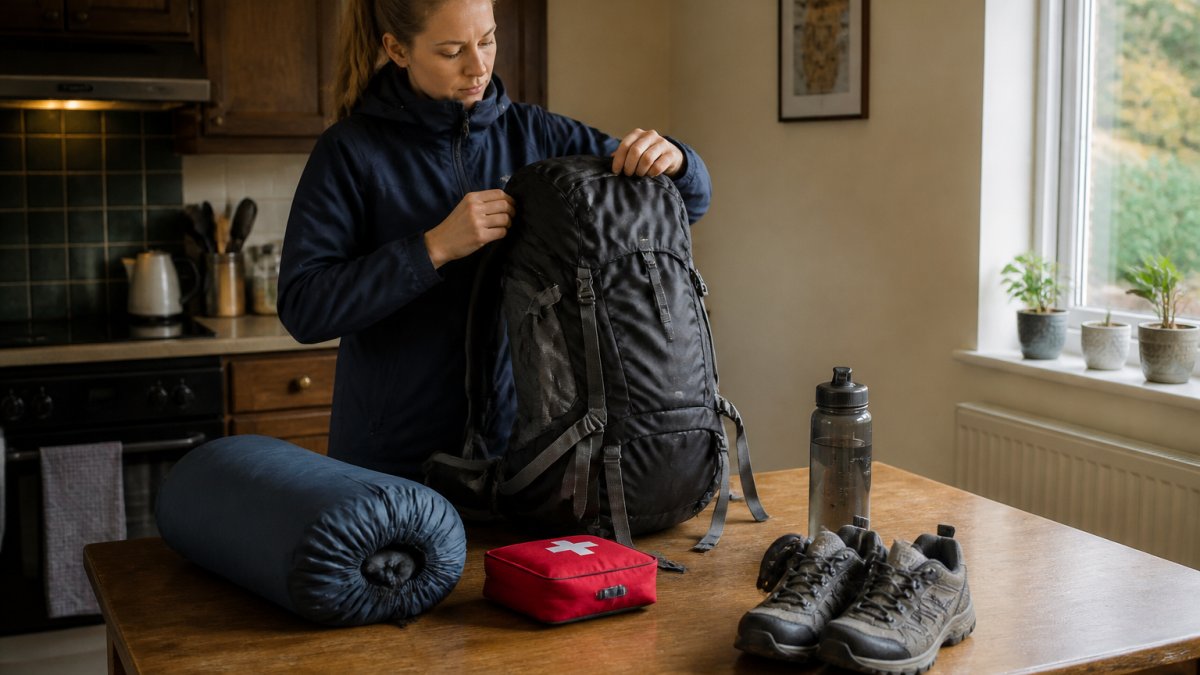
Here is the kit we would build first:
| Item | Price | Why it comes first |
|---|---|---|
| 40L Hiking Backpack | £39.95 | Day walks, weekends and overnight bothy trips |
| Waterproof Hiking Jacket | £16.95 | Keeps showers and wind off |
| Outdoor Hiking Shoes | £19.95 | Dry-day trails and park paths |
| First Aid Kit | £9.95 | Blisters, stings and small cuts |
| Sports Water Bottle | £15.50 | Leak-proof, 450ml to 950ml |
| Folding Trekking Pole | £29.95 | Sold singly; knees on descents |
| Rechargeable LED Lantern | £19.95 | Folds down, USB or solar charging |
| Total | £152.20 | Leaves budget for socks and a flask |
Add the Camping Sleeping Bag at £24.95 and the Lightweight Sleeping Pad at £19.95 once you book your first overnight trip, and you are still under £200.


What to Buy First and What to Leave Until Later
Buy footwear, a pack and a waterproof layer first. These three decide whether a walk is comfortable, and they are the items beginners most often get wrong.
Leave the Ultralight Portable Folding Camping Table at £39.95 until you are car camping regularly. It is a lovely piece of kit and completely useless on a hill.
Price and Value Comparison: What a Beginner Kit Actually Costs
A beginner kit costs between roughly £100 and £250 depending on how much you buy at once and whether you camp overnight. The gap between budget and premium sits mostly in waterproofing and weight, not in basic function.
Here is where the money goes:
- Under £100: shoes, jacket, first aid kit, bottle. Day walks only.
- £100 to £170: adds a 40L pack and trekking pole. Weekend walks and hut trips.
- £170 to £250: adds sleeping bag, pad and lantern. Overnight camping.
Value for money is not the cheapest item. It is the item you use twenty times. A £16.95 jacket that lives in the car boot beats a £200 shell that stays in the wardrobe.

Choosing a Retailer by Activity and Experience Level
Choosing a retailer by activity and experience level is the single most useful filter a beginner has. Match the shop to the hobby, not the other way round. Most guides list activities and stop there; the useful version tells you what to buy first, what it should cost, and which retailer model fits.
Use this as a decision guide, not a shopping list:
| Activity | Buy first | Typical entry cost | Retailer model that fits |
|---|---|---|---|
| Family camping | Tent, sleeping bags, mats, lantern | £120-£250 for a family of four | Value-focused own-brand chain; bundle pricing and reliable delivery matter more than brand |
| Day walking and hiking | Footwear, waterproof jacket, 20-30L pack | £60-£120 | Large chain for footwear fit; value retailer for layers and packs |
| Wild camping | Lightweight tent, sleeping pad, stove | £150-£300 | Mid-market specialist; honest weight figures and advice on pitch rules |
| Cycling and running | Helmet, lights, layered clothing | £80-£200 | Specialist or online-first retailer with depth in that category |
| Climbing | Harness, helmet, belay device | £120-£250 | Specialist only; do not buy safety-critical kit from a generalist |
A few rules sit behind that table:
- Family camping rewards delivery reliability and return terms more than brand. You are buying volume, and a missing pole on the Friday before a trip is the whole weekend.
- Walking and hiking rewards footwear fit above everything. Buy shoes in person if you can, and check the retailer publishes size conversions and fit notes if you buy online.
- Wild camping rewards honest weight figures. A retailer that lists packed weight per item is easier to trust than one that hides it.
Starter kits: essential versus optional
A beginner starter kit is smaller than most people expect. For a first day walk, the essentials are footwear, a waterproof layer, a small pack, water and a first aid kit.
- Essential: footwear, waterproof jacket, 20-30L pack, water bottle, first aid kit, map or phone with offline maps.
- Worth adding early: trekking pole for descents, spare socks, a warm mid-layer.
- Optional until you camp: tent, sleeping bag, sleeping pad, lantern, camping table.
The common mistake is buying the optional list first because it is the fun part. Buy the essentials, do two trips, then let the trips tell you what to add.
Online versus in-store for a first purchase
Some purchases are better in person. Footwear is the clearest case: fit varies between brands and a half-size error ruins a walk. Safety-critical kit such as a climbing harness is the second. Everything else, packs, layers, camping accessories, is practical to buy online if the retailer publishes sizing guidance, delivery times and a clear returns window.
A workable split for a beginner: try footwear on in a store, then buy the rest online once you know your size and what you actually need.
Conclusion
The hardest part of buying your first kit is not finding a shop. It is resisting the urge to buy everything at once before you know what you actually need.
TAKE A HIKE stocks a focused range for beginners and weekend campers, with free tracked UK delivery over £50, a 14-day money-back promise on unused items, and support six days a week from 8am to 8pm. Start with footwear, a pack and a waterproof layer, then add camping kit when a trip demands it. View all new products and build your kit in the right order.
Frequently Asked Questions
What are some stores similar to GO Outdoors for a complete beginner?
Look for shops that stock a full starter range rather than one specialist category, publish clear prices, and explain their returns policy up front. A good beginner shop sells the whole first kit: a 40-litre pack, a waterproof jacket, trail shoes, a sleeping bag, a mat and a lantern. Check delivery windows before ordering, because a pack that arrives after your trip is no use. TAKE A HIKE, for example, dispatches in 1 to 3 working days and offers free tracked delivery over £50, with a 14-day money-back promise on unused items.
Is Decathlon better than GO Outdoors for first-time campers?
The Decathlon vs GO Outdoors question usually comes down to range versus convenience. Both carry own-brand budget lines, and both have physical stores where you can handle a tent before buying. For a first-timer the deciding factors are stock availability on the day, whether staff can explain the difference between two similar sleeping bags, and how easy a return would be. Compare the specific item you need rather than the shop as a whole, and check the returns window on camping equipment, which is often shorter than on clothing.
Where can beginners buy affordable hiking gear without wasting money?
Start with the four items you will use on every trip: footwear, a waterproof layer, a pack and a water bottle. Affordable hiking gear for beginners does not need to be the cheapest option, just the right one. A £19.95 trail shoe suits dry park paths; a £16.95 waterproof jacket handles showers but not a mountain downpour. Buy the general-use version first, then upgrade the one item you use hardest. A first kit covering pack, shoes, jacket, first aid kit and bottle comes to £102.30 at TAKE A HIKE.
How do I know a shop's gear will last more than a couple of trips?
Check what the listing actually claims. A sleeping bag described as 210T tear-resistant polyester with a waterproof shell tells you more than a page of marketing copy. Look for specific materials, sizes in centimetres and weights in kilograms, and read the honest limitations. A jacket sold as a shower jacket is being described accurately; one sold as a mountain shell at £16.95 is not. Ask about the returns process for faulty goods separately from the unused-items policy, and confirm how long a refund takes to process.
Should a beginner shop online or in store for camping equipment?
In store wins on fit: boots, packs and sleeping bags all depend on body size, and a 40-litre pack that sits wrong will rub by mile five. Online wins on price and range, especially for accessories where fit does not matter. A sensible split is to try footwear and packs in person if you can, then buy lights, bottles, first aid kits and tables online. Check the sizing chart carefully, note that EU sizes are common on trail shoes, and confirm the returns window covers unused items in original packaging.


