

Best Lightweight Camping Gear 2026
Table of Contents
- What Makes Lightweight Camping Gear Essential
- Best Lightweight Camping Tent for Multi-Day Trips
- Best Lightweight Sleeping Bag for Summer and Shoulder Seasons
- Sleep System Foundations: Pads and Mats That Weigh Less
- Lightweight Camping Gear for Beginners: What You Actually Need
- Complete Lightweight Camping Checklist: Weight Budget Breakdown
- Lightweight Gear by Trip Type and Conditions
- Frequently Asked Questions
Last Updated: October 18, 2026
What Makes Lightweight Camping Gear Essential
Carrying less weight up a hill changes everything: your knees hurt less, you move faster, and you enjoy the walk instead of counting down the hours until camp.
The difference between a standard 15 kg kit and a lightweight 6 kg kit is profound: over three days, that's 27 kg less total load your body carries, so your muscles recover faster and you sleep better.
The real skill isn't buying expensive ultralight gear, it's understanding what matters for your trip type and conditions.
Best Lightweight Camping Tent for Multi-Day Trips
A lightweight camping tent should weigh under 1.5 kg and pitch in under three minutes, even in fading light. The Ultralight Camping Tent at £149.95 hits both targets, with waterproof fabrics and proper ventilation so you wake up dry instead of damp from condensation, a real problem in UK conditions.


Navy blue fabric means it doesn't shout across the valley, and the simple pitch system lets you set up before rain arrives. Seam-seal it for extended trips in heavy rain.
The honest limitation: this tent is a shelter, not a hotel room, with minimal internal space. If you're claustrophobic or planning to spend entire rainy days inside, you'll feel the squeeze.
Best Lightweight Sleeping Bag for Summer and Shoulder Seasons
The Ultralight Camping Sleeping Bag at £39.95 weighs 1.35 kg and compresses down to fit neatly into a rucksack. Its insulated design suits cool summer nights and shoulder-season conditions, most UK camping outside winter.
A common mistake is buying a four-season bag for trips that don't need it, carrying unnecessary weight and paying for insulation you won't use. This ultralight option works because it's paired with a proper sleeping pad, together they handle the cold far better than either does alone.

It comes in left- and right-side versions, so you can zip two together as a couple. No temperature rating is listed, so use a suitable mat and add layers in colder conditions.
Sleep System Foundations: Pads and Mats That Weigh Less
Your sleeping pad matters more than your sleeping bag for staying warm. The pad insulates you from the cold ground, the bag just traps your body heat.
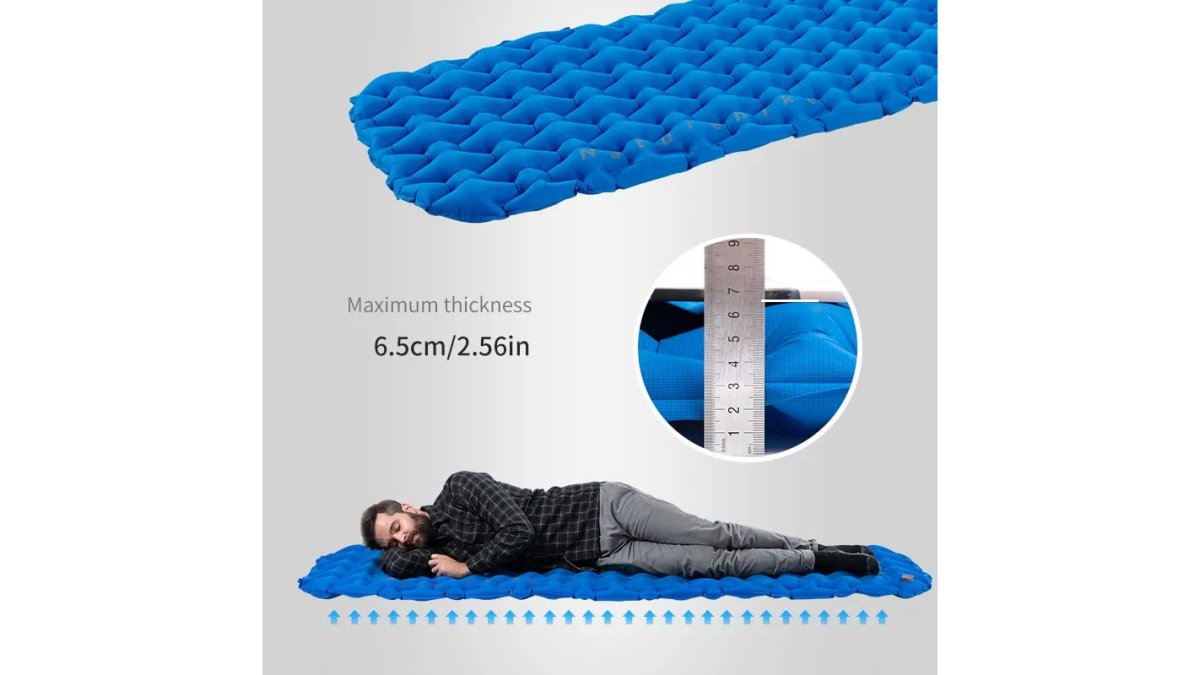
TAKE A HIKE stocks three solid options. The Lightweight Sleeping Pad at £19.95 inflates quickly, weighs very little, and has a surface that relieves pressure points.
For more comfort and durability, the Inflatable Camping Sleeping Mat with Built-In Pump at £32.95 removes the hassle of manual inflation.
The Inflatable Air Sleeping Pad Outdoor Mat at £15.95 is the budget option at 490 g, inflating to 190 x 58 x 5 cm with a compact storage bag.
Lightweight Camping Gear for Beginners: What You Actually Need
Beginners often panic about missing something crucial. The reality is simpler: you need shelter, sleep warmth, a way to cook, and a way to carry it all.
Start with the core kit: tent, sleeping bag, sleeping pad, stove, fuel, cookware, and a backpack.
Many guides recommend buying expensive ultralight versions of everything at once. Don't.
The Lightweight Mini Camping Stove at £12.95 is genuinely good for beginners because it's simple. At 45 g, it folds to matchbox size.
A Beginner's Weight Budget: Where the Grams Actually Go
The single most useful thing a beginner can do is weigh every item before the first trip and write the numbers down. The big three (tent, bag, pad) typically account for roughly 60-70% of base weight, while the remaining 30-40% hides in cookware, clothing, electronics, and toiletries.
Here is a realistic first-kit budget for a three-season weekend, using the products in this guide as the anchor:
| Category | Example item | Price |
|---|---|---|
| Shelter | Ultralight Camping Tent | £149.95 |
| Sleep warmth | Ultralight Camping Sleeping Bag | £39.95 |
| Ground insulation | Lightweight Sleeping Pad | £19.95 |
| Cooking | Mini Camping Stove | £12.95 |
| Cookware | Pot, pan, spoon | , |
| Base weight subtotal | ~£223 |
That subtotal excludes the backpack itself (typically 1-1.5 kg for a 40-50 litre pack), food, water, and clothing. Add those and a beginner's realistic all-in carry for a weekend sits around 7-9 kg.
The Three Beginner Mistakes That Add the Most Weight
Buying a four-season sleeping bag for three-season trips. A four-season bag can weigh 1.8-2.5 kg and costs significantly more.
Carrying a heavy synthetic pad because it feels more durable. Closed-cell foam pads are bombproof but bulky and less comfortable.
Over-packing clothing. Clothing is the heaviest category beginners underestimate. A spare fleece, two spare pairs of trousers, and a "just in case" waterproof jacket can easily add 2 kg.
What to Buy First, and What to Borrow
If budget is tight, prioritise in this order: sleeping pad, then sleeping bag, then shelter. A poor pad ruins sleep faster than a poor tent ruins a trip, and a warm pad lets a cheaper bag perform well.
The Lightweight Mini Camping Stove at £12.95 is the one item worth buying immediately: it is cheap, light, and removes an entire category of uncertainty from your first trip.
Complete Lightweight Camping Checklist: Weight Budget Breakdown
Building a lightweight kit means working within a weight budget. Most people find 6-8 kg total (including food and water) is the sweet spot for comfort and speed on multi-day trips.
Core Kit Essentials Under 4 kg
| Item | Notes |
|---|---|
| Ultralight tent | Shelter and weather protection |
| Ultralight sleeping bag | Warmth for summer/shoulder season |
| Lightweight sleeping pad | Ground insulation and comfort |
| Mini camping stove | Fuel not included |
| Cookware and utensils | Lightweight pot, pan, spoon |
| Subtotal | Core shelter and sleep system |
This is your non-negotiable foundation. Everything else is addition.
Optional Comfort Items and Their Weight Trade-offs
Beyond the core kit, add items because you know they matter for your specific conditions, not because you think you should.
The Ultralight Portable Folding Camping Table at £39.95 sets up in seconds and folds compactly, but at 2-3 kg depending on size it's a meaningful addition.
The Parachute Nylon Camping Hammock with Carabiners & Tree Straps at £22.95 weighs approximately 850-1,000 g and is a genuine alternative to a tent in woodland with suitable trees.
Trekking poles deserve a mention. The Mons Peak IX Tiger Paw Z Trekking Poles (Z-120) at £64.95 fold to 37.5 cm and weigh 480 g per pair, reducing knee stress on descents.
For serious ultralight enthusiasts, the Mons Peak IX Tiger Paw Carbon Trekking Poles at £129.95 weigh just 394 g per pair.
Lightweight Gear by Trip Type and Conditions
| Trip type | Shelter | Sleep system | Cooking | Base weight (excl. pack, food, water) | Packed volume |
|---|---|---|---|---|---|
| Summer lowland weekend | Ultralight tent (~1.2 kg) | 1.35 kg bag + 490 g pad | Mini stove (45 g) + small pot | ~3.3 kg | ~28-32 litres |
| Shoulder-season moorland | Ultralight tent (~1.2 kg) | 1.35 kg bag + 692 g insulated mat | Mini stove + windshield | ~3.6 kg | ~30-34 litres |
| Multi-day Highland traverse | Ultralight tent (~1.2 kg) | 1.35 kg bag + 692 g mat + thermal liner | Mini stove + 1.2 L pot | ~4.0 kg | ~34-38 litres |
| Coastal camping | Ultralight tent (~1.2 kg) | 1.35 kg bag + 692 g mat | Mini stove + windshield | ~3.6 kg | ~30-34 litres |
Packed volumes are approximate and assume the tent is carried on the outside of the pack or in a compression sack. Treat them as planning figures, not guarantees.
Summer trips (June to August, lowland areas): The ultralight tent, 1.35 kg sleeping bag, and basic sleeping pad handle everything.
Shoulder season (May, September, October, higher elevations): Upgrade to a better-insulated sleeping pad. The Inflatable Camping Sleeping Mat with Built-In Pump at £32.95 weighs approximately 692 g and insulates far better than a 490 g mat with an R-value of 1.3.
Multi-day moorland trips: Weight matters more because you're carrying everything for three or four days. Prioritise the ultralight tent and minimal cookware, and skip the camping table. Trekking poles reduce knee impact on repeated descents: the Mons Peak IX Tiger Paw Z Trekking Poles (Z-120) at £64.95 weigh 480 g per pair and fold to 37.5 cm.
Coastal camping: Salt air corrodes metal, so choose gear with stainless steel or anodised finishes.
How to Build a Weight Budget for Your Trip
Set a base-weight target first, then allocate it. Experienced backpackers commonly run 4.5-6 kg for three-season trips, with the big three taking roughly 3-3.5 kg and everything else fitting into the remaining 1.5-3 kg. Beginners should aim for 6-8 kg and accept that the first kit will be heavier than the second.
Work through it in this order:
- Weigh the big three. Tent, bag, and pad. If they total more than 3.5 kg, fix that before buying anything else.
- Weigh your pack empty. A 40-50 litre pack typically weighs 1-1.5 kg. If yours is over 2 kg, it is eating your budget.
- Weigh clothing as a single bundle. This is the category most people underestimate. Target 1.5-2 kg for a three-season trip.
- Weigh the kitchen. Stove, pot, fuel, and utensils should total under 0.8 kg for solo trips.
- Everything else goes in one pile and gets weighed last. If the total exceeds your target, cut from this pile, not from the big three.
The real principle: match your gear to your trip. Don't buy a complete ultralight kit if you're mostly car camping with friends, and don't buy heavy gear if you plan to backpack regularly. Start with what your actual trips demand, then refine.
Frequently Asked Questions
What is the best lightweight camping gear for 2026?
The best lightweight camping gear balances weight savings with durability and comfort. Essentials include an ultralight tent (around 1.5 kg), a compact sleeping bag (1.35 kg), and an inflatable sleeping pad (490-692 g). For beginners, the Ultralight Camping Tent at £149.95 and Ultralight Camping Sleeping Bag at £39.95 offer proven reliability. Prioritise items you'll use on every trip, then add comfort pieces based on your trip length and season.
What should I pack for lightweight camping?
A lightweight camping checklist includes: shelter (tent or hammock), sleep system (sleeping bag and pad), cooking kit (stove and fuel), water container, basic first aid, and navigation tools. The Lightweight Mini Camping Stove at £12.95 weighs just 45 g and fits in a pocket. Avoid duplicating items: one knife, one spoon, one cup. Each piece should serve multiple purposes. Start with essentials totalling 3-4 kg, then add seasonal items like extra layers or a cooking pot.
How much should a lightweight camping pack weigh?
A lightweight pack with all gear should weigh 5-7 kg for weekend trips and 7-10 kg for multi-day expeditions. This includes shelter, sleep system, cooking equipment, clothing, and food but not water. Your tent and sleeping bag together should not exceed 2 kg. The Ultralight Camping Tent at £149.95 and Ultralight Camping Sleeping Bag at £39.95 combined weigh under 2.5 kg, leaving room for other essentials. Beginners often pack 12-15 kg; reducing this by half requires intentional choices about every item.
What is the difference between lightweight and ultralight camping gear?
Lightweight gear typically weighs 30-50% less than standard equipment but maintains comfort and durability for regular use. Ultralight gear pushes further, cutting weight by 50-70%, often sacrificing some comfort or accepting higher costs. The Ultralight Camping Tent at £149.95 uses minimal materials for fast setup and low weight. Ultralight is ideal for experienced hikers covering long distances; lightweight suits most weekend campers. Choose based on trip type, not just the label.
How can I reduce the weight of my camping gear without sacrificing comfort?
Prioritise multi-purpose items: a sleeping pad doubles as insulation and cushioning. Swap heavy tools for lighter alternatives, the Lightweight Mini Camping Stove at £12.95 replaces a bulky camp stove. Choose inflatable pads (690 g) over foam. Share group items on trips with others. Invest in one quality lightweight piece at a time rather than replacing everything at once. The Mons Peak IX Tiger Paw Carbon Trekking Poles at £129.95 weigh just 394 g per pair, cutting weight without losing function.


