



How to Choose a Water Filter for Wild Camping
Table of Contents
- Understanding Waterborne Risks in UK Wild Camping
- Water Filter vs Purifier for Camping: What's the Difference
- Filter Technologies and How They Work
- How to Purify Stream Water for Drinking in the Field
- Choosing the Right Water Filter: Key Specifications
- Maintaining Your Camping Water Filter
- Making Your Final Selection
- Frequently Asked Questions
Last Updated: October 11, 2026
Understanding Waterborne Risks in UK Wild Camping
When you're collecting water from a stream or lake during a wild camping trip without a water filter wild camping setup, you're exposed to waterborne pathogens that can cause serious illness. The most common threats are bacteria like E. coli, protozoa such as giardia and cryptosporidium, and viruses including norovirus and hepatitis A. Understanding these risks is the first step toward choosing the right water filter for wild camping.

Different filtration methods target different pathogens: bacteria, protozoa (which survive in cold water), and viruses (which require chemical treatment or boiling). Understanding these threats matters more than buying the cheapest option.
UK water sources, especially upland streams, moorland water, and remote lochs, carry higher pathogen loads than you might expect. Livestock grazing, wildlife activity, and decomposing organic matter all contribute to contamination. Even clear-looking water can harbour invisible threats. This is why a portable water filter for wild camping isn't optional equipment; it's essential safety gear.
Water Filter vs Purifier for Camping: What's the Difference
A water filter removes particles and bacteria/protozoa through hollow-fibre membranes. A purifier adds chemical treatment or UV light to neutralise viruses. For most UK wild camping, a quality filter is sufficient; viruses are rare in UK freshwater. Near populated areas, a purifier offers broader protection at the cost of weight and processing time.

Hollow-fibre membranes (0.01 microns) block bacteria and protozoa. Carbon filters reduce odour and chemical contaminants. For a water filter wild camping setup, most experienced campers carry a mechanical filter as their primary tool, supplemented by purification tablets for backup. This combination covers all pathogen types without excessive weight.
Filter Technologies and How They Work
Hollow-fibre membranes consist of thousands of tiny tubes that trap particles larger than their pore size, removing 99.99% of bacteria and 99.9% of protozoa.
Carbon filters improve taste and remove chemical contaminants but don't remove pathogens; they're always paired with mechanical filtration. Purification tablets offer lightweight chemical disinfection. Iodine tablets work quickly but leave aftertaste and aren't suitable for pregnant women or those with thyroid conditions. Chlorine dioxide tablets are more effective with less taste impact, requiring 30 minutes to several hours contact time depending on temperature and turbidity.
Boiling remains the most reliable method for killing all pathogens, but it requires fuel, time, and a heat source. For wild camping where weight matters, boiling is a backup strategy rather than a primary solution.
How to Purify Stream Water for Drinking in the Field
Assessing your water source
Upland streams and fast-flowing mountain burns are safest: cold, fast-moving water has fewer pathogens. Lowland rivers near settlements or farmland carry significantly higher pathogen loads; add a purification tablet after mechanical filtration. Upland lochs fed by mountain streams are relatively safe; avoid lowland lochs near populated areas or with algal blooms. Moorland water is often peat-stained and highly turbid; pre-filtering is essential.
Practical source selection checklist
- Choose the fastest-moving water you can access; avoid stagnant pools.
- Avoid water within 50 metres of livestock or visible animal activity.
- Avoid water immediately downstream of settlements or farms.
- Pre-filter visibly discoloured water before using your main filter.
- Do not use water with algal blooms, foam, or unusual smell.
- In winter or after heavy rain, plan extra pre-filtering time.
Pre-filtering turbid or peaty water
If your water source is visibly cloudy or stained, pre-filtering protects your main filter from clogging and extends its lifespan. Pour water through cloth, coffee filter, or mesh strainer and let sediment settle 5-10 minutes. In peat-stained water, pre-filter twice. Alternatively, carry a lightweight pre-filter cartridge (£8-15) that processes 5,000+ litres.
The filtration process: step by step
Step 1: Collect water safely, Use a clean container. With straw filters, collect in a cup first; don't drink directly from the source.
Step 2: Pre-filter if necessary, If visibly turbid or peat-stained, pour through cloth or a pre-filter.
Step 3: Apply your mechanical filter, Attach the filter to your container. Expect 30 seconds to 2 minutes per litre. If flow is very slow, backflush immediately.
Step 4: Add chemical disinfection if appropriate, For lowland sources or near settlements, add a purification tablet. Allow 30 minutes contact time (longer in cold water below 5°C).
Step 5: Store and consume, Drink filtered water promptly or store in a clean, sealed container. Do not store for more than 24 hours without additional treatment.
Cold-weather and field reliability
Cold water (below 5°C) flows 30-50% more slowly through membranes; sediment-heavy water clogs filters faster. Protect your filter from freezing by storing in an insulated pouch or sleeping bag. Test with clean water at home after thawing.
Choosing the Right Water Filter: Key Specifications
When selecting a water filter for camping, focus on these specifications:
Filtration accuracy (micron rating), Look for 0.01 to 0.2 microns. Most quality camping filters operate at 0.01 microns, removing bacteria and protozoa effectively.
Flow rate, A rate of 500-1,100 ml/min is practical for camping. Slower filters are frustrating; faster filters are often heavier or more expensive.
Filter capacity, A 1,500-2,000 litre capacity covers most multi-day trips. Longer expeditions require larger capacity or spare cartridges.
Weight, Portable camping filters typically weigh 70-300 grams. For wild camping, prioritise something under 150 grams if weight is critical.
Material and durability, Plastic and TPU (thermoplastic polyurethane) are standard. Avoid filters that feel fragile or have exposed components that could break if dropped.
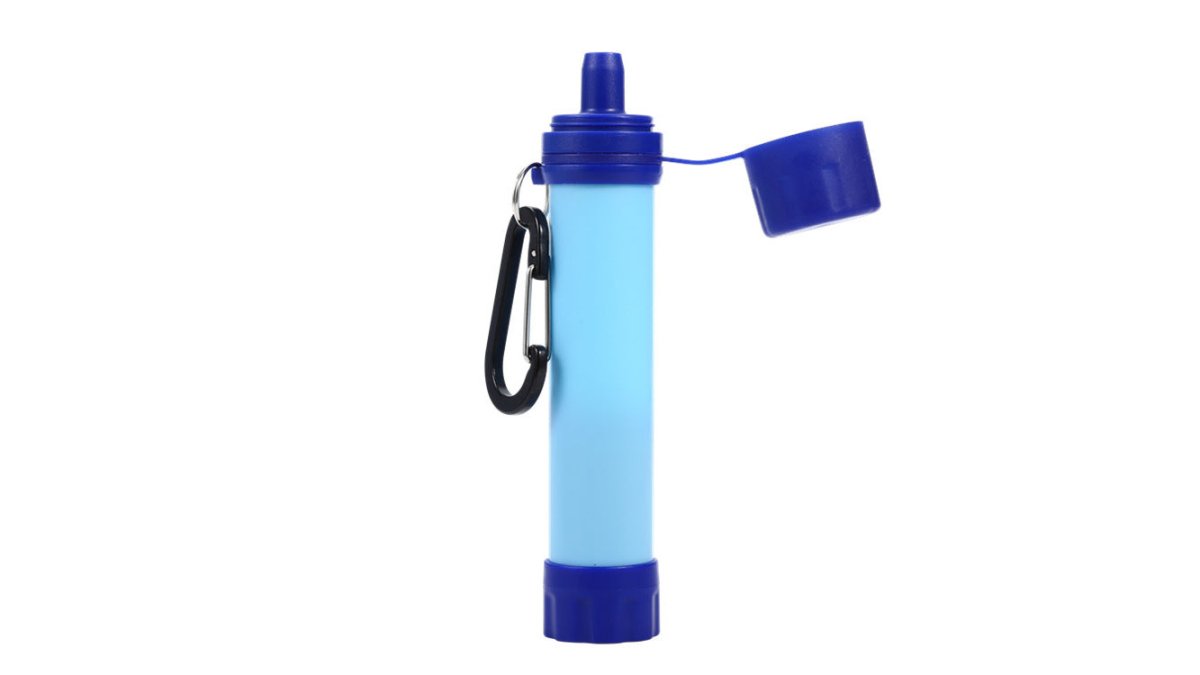
At TAKE A HIKE, we stock filters that balance these factors for UK wild camping. The Portable Water Filter with 2,000 L Filter Life offers hollow-fibre membrane filtration with a 2,000-litre capacity and flow rate up to 1,100 ml/min, ideal for multi-day trips. For ultralight camping, the Portable Drinking Water Filter Straw at just 105-300 grams is compact enough to fit any pack.
| Specification | Why It Matters | What to Look For |
|---|---|---|
| Micron rating | Determines what pathogens are removed | 0.01-0.2 microns |
| Flow rate | Speed of water delivery | 500-1,100 ml/min |
| Filter capacity | How long before replacement | 1,500-2,000+ litres |
| Weight | Affects pack load on long trips | Under 150g ideal |
| Material | Durability and reliability | TPU or plastic with solid construction |
Maintaining Your Camping Water Filter
Filter maintenance directly affects performance, reliability, and lifespan.
Backflushing: extending filter life
Portable Drinking Water Filter Straw, 18 cm Outdoor Purifier →
Most hollow-fibre filters can be backflushed, reversing water flow to clear trapped particles, extending filter life by 50% or more.
Recognising clogging and reduced flow
If your filter's flow rate drops noticeably, taking more than 3-4 minutes to fill a litre, the membrane is clogged. This is normal after processing turbid water or peat-stained water. Backflush immediately.
In cold water (below 5°C), flow rates naturally slow by 30-50%, so don't mistake winter slowness for clogging. Test your filter at home in cold water before your trip so you know what to expect.
If flow remains slow after backflushing and you're in cold conditions, you have two options: switch to purification tablets for the remainder of your trip, or boil water if you have fuel.
Storage and preventing mould or bacterial growth
Store your filter dry between trips. Wet membranes can develop mould or bacterial growth, which will contaminate water on your next use.
Replacement cartridges: cost and timing
Replace your filter cartridge when flow rate drops noticeably after backflushing, or when you've reached the manufacturer's capacity limit. Using a filter beyond its rated capacity risks incomplete filtration and potential illness.
Most portable filters have 1,500-2,000 litre capacities, covering 10-15 days for one person drinking 2-3 litres daily.
Replacement cartridges typically cost £12-25, depending on the filter model. For trips longer than two weeks, carry a spare cartridge.
Some filters allow you to clean and reuse cartridges by backflushing and drying them thoroughly. Check your manufacturer's instructions; not all cartridges are reusable.
Testing your filter before your trip
Always test your filter at home before departing. This reveals whether it works as expected and whether the flow rate meets your needs.
Test your filter with tap water first, then with water from a local stream or river (if safe to collect).
Test your filter in cold water for winter trips; cold water flows much more slowly through membranes.
Field troubleshooting
If your filter fails in the field, you have backup options: purification tablets (lightweight, inexpensive, 30 minutes contact time), boiling (most reliable but requires fuel), or a combination approach using both.
Making Your Final Selection
Your choice depends on three factors: trip duration, water source risk, and personal priorities around weight versus convenience.
For weekend trips to established campsites with low contamination risk, a lightweight straw filter like the Portable Drinking Water Filter Straw is sufficient. At under 300 grams, it adds minimal pack weight and costs less than £20.
For multi-day backcountry expeditions in remote areas, invest in a higher-capacity filter with better flow rate. The Portable Water Filter with 2,000 L Filter Life removes 99.99% of bacteria and 99.9% of protozoa, with a 2,000-litre capacity that covers extended trips. At around £34, it's a reliable choice for serious wild camping.
If viral contamination concerns you, particularly on trips near populated areas, pair any mechanical filter with purification tablets. This combination covers all pathogen types without excessive weight.
Consider also the Outdoor Personal Water Purifier for Filtered Drinking Water, which offers integrated filtration in a bottle format. This suits campers who prefer a single, consolidated system over carrying separate components.

Test your chosen filter at home before your trip. Understand how it works, how long processing takes, and whether the flow rate meets your expectations. A filter that frustrates you in your garden will be even more annoying in the field.
Frequently Asked Questions
What is the difference between a water filter and a water purifier?
A water filter removes bacteria and protozoa through physical barriers like hollow-fibre membranes, typically down to 0.01 microns. A purifier goes further, also neutralising viruses using chemical treatment (tablets or carbon). For UK wild camping, most backcountry sources require filtration for bacteria and protozoa; viruses are rare in remote freshwater sources but purifiers offer extra security. Choose based on your water source risk assessment.
Do I really need a water filter for wild camping?
Yes. Even clear-looking streams and lakes can contain bacteria like E. coli and protozoa such as Giardia, which cause severe gastrointestinal illness. Boiling is reliable but heavy and time-consuming. A portable filter weighing 70-120g removes 99.99% of bacteria and 99.9% of protozoa, making it the practical choice for multi-day trips. Without treatment, you risk illness that can end your trip or require medical attention.
How do I know if a water source is safe to filter?
Avoid water downstream of livestock, settlements or visible contamination. Choose fast-moving streams over stagnant water; higher altitude sources are generally safer. Avoid water with algal blooms or unusual colour. Look upstream for potential pollution sources. Even pristine-looking water can harbour microorganisms invisible to the eye, which is why filtration is essential. If in doubt, boil or use chemical tablets alongside filtration.
How often should I replace my camping water filter cartridge?
Replacement depends on filter lifespan, measured in litres. A 2,000-litre filter serving two people for a week uses roughly 14 litres, lasting 140+ trips. A 1,500-litre filter lasts proportionally less. Check your filter's specifications and track usage. Backflush regularly to extend life. Replace immediately if flow slows significantly or if you suspect damage. Carrying a spare cartridge on extended trips prevents being stranded without treatment capability.
Choosing a water filter for wild camping isn't complicated once you understand the risks and technologies involved. The right filter removes pathogens that could cause serious illness, giving you confidence in your water source. TAKE A HIKE stocks filters proven reliable in UK conditions, with free tracked delivery on orders over £50 and a 14-day return policy on unused items. View all new products and find the filter that matches your next adventure.


