



Essential Camping Gear for Beginners: Complete Guide
Table of Contents
- What Counts as Essential Camping Gear for Beginners
- Shelter: Tent, Poles, Pegs and Groundsheet
- Sleep System: Sleeping Bag, Mat and Bedding
- Beginner Camping Checklist: Core Gear by Category
- What to Pack for Camping: Clothing, Water and Hygiene
- Camping Cooking Equipment and Camp Kitchen Setup
- Camping Safety Essentials and Emergency Kit
- Budget Tiers: What to Buy, Borrow or Substitute
- Frequently Asked Questions
Last Updated: October 9, 2026
What Counts as Essential Camping Gear for Beginners
Essential camping gear for beginners falls into a few clear categories: shelter, sleep system, cooking equipment, water and hygiene supplies, clothing, and safety essentials.
The most common mistake is buying too much too quickly, or picking the cheapest option without understanding what makes gear work in the field.
Match your gear to where and when you're camping: a three-season tent works for most UK trips from spring through autumn, while the Scottish Highlands in winter demand a four-season tent.

Shelter: Tent, Poles, Pegs and Groundsheet
Your tent is your first line of defence against weather, keeping rain out, wind from collapsing it, and condensation to a minimum. Most beginner tents are three-season models; four-season tents suit serious winter camping.
A tent has three parts: the flysheet (outer waterproof layer), the inner tent (where you sleep), and the poles and pegs.
Poles are usually aluminium alloy, which balances weight and strength; cheap plastic poles snap. Always bring spare pegs because they get lost or bent.
Choosing the Right Tent Size and Rating
A two-person tent sleeps two adults snugly, and solo campers often prefer one for the extra space; three-person tents are wider but heavier.
Temperature rating on a tent tells you the season it's designed for. Three-season tents are rated to around 5°C at night. If you're camping in summer or early autumn, three-season is fine.
Weight matters if you're backpacking, but for car camping a heavier tent is often better: 3 kg is light, 4 kg standard, and over 5 kg heavy but usually more durable.
Tent Footprint and Spare Pegs
A tent footprint is optional but worth it: a thin groundsheet under your tent that protects the base from stones, thorns, and damp ground, extending its lifespan by years.
Spare pegs are non-negotiable, bring at least four extras, as they bend, snap, and disappear into the dark. Aluminium pegs are standard; steel pegs are heavier but more durable.
Sleep System: Sleeping Bag, Mat and Bedding
Your sleep system determines whether you wake up refreshed or exhausted and cold. It consists of a sleeping bag, a sleeping mat underneath you, and optional pillows or blankets.
On a sleeping bag, the "comfort" rating is the temperature at which an average person sleeps comfortably; the "limit" rating is the coldest it can handle.
Sleeping bags come in synthetic (polyester) or down fills.
Temperature Rating and Sleeping Bag Selection
The temperature rating is the single most important spec on a sleeping bag.
Sleeping bags come in rectangular (spacious, cold at the feet), mummy (warm, restrictive), and semi-mummy (a compromise) shapes. For beginners, semi-mummy or rectangular is more comfortable; mummy bags suit serious winter camping.
The TAKE A HIKE Camping Sleeping Bag at £24.95 comes in standard or wide cuts, weighs from 1 kg to 1.8 kg, and includes a compression bag.

Sleeping Mat, Airbed or Camp Bed
A sleeping mat separates comfort from misery. There are three types: closed-cell foam (cheap, durable, not very comfortable), inflatable (lightweight, comfortable, can puncture), and self-inflating (a hybrid).
An inflatable mat suits most campers: lightweight, packs small, and genuinely cushioned.
A camp bed or airbed is heavier but more comfortable for car camping. If you're walking or cycling, an inflatable mat is the practical choice.
Beginner Camping Checklist: Core Gear by Category
Here's what you actually need for a weekend trip. Print this or save it to your phone.
| Category | Essential Item | Why It Matters |
|---|---|---|
| Shelter | Tent with flysheet and poles | Keeps rain and wind out |
| Shelter | Tent pegs (at least 8, plus 4 spares) | Holds tent down in wind |
| Shelter | Tent footprint (optional but recommended) | Protects tent base, extends life |
| Sleep | Sleeping bag (temperature-rated for season) | Keeps you warm through the night |
| Sleep | Sleeping mat or airbed | Insulates from ground, provides comfort |
| Sleep | Pillow (optional) | Neck support; can use a rolled jumper |
| Cook | Camp stove or portable cooker | Heats water and food |
| Cook | Cookware (pot, pan, kettle) | Cooking and boiling water |
| Cook | Cutlery, plates, cups, bowls | Eating and drinking |
| Cook | Lighter or matches | Starting your stove |
| Water | Water bottle or container (2-3 litres) | Carrying drinking water |
| Water | Water purification tablets (optional) | Backup for untreated water sources |
| Hygiene | Toilet paper and trowel | Digging a cat hole away from camp |
| Hygiene | Hand sanitiser or wet wipes | Cleaning hands before eating |
| Hygiene | Soap and toothbrush | Basic hygiene |
| Clothing | Layers (base, mid, outer) | Adapting to temperature changes |
| Clothing | Warm hat and gloves (autumn/winter) | Preventing heat loss |
| Clothing | Waterproof jacket and trousers | Staying dry in rain |
| Clothing | Sturdy boots or hiking shoes | Protecting feet on uneven ground |
| Light | Head torch or lantern | Seeing after dark |
| Safety | First aid kit | Treating minor injuries |
| Safety | Map and compass (or GPS) | Navigation |
| Safety | Whistle | Emergency signalling |
What to Pack for Camping: Clothing, Water and Hygiene
Clothing for camping is about layers, not bulk.

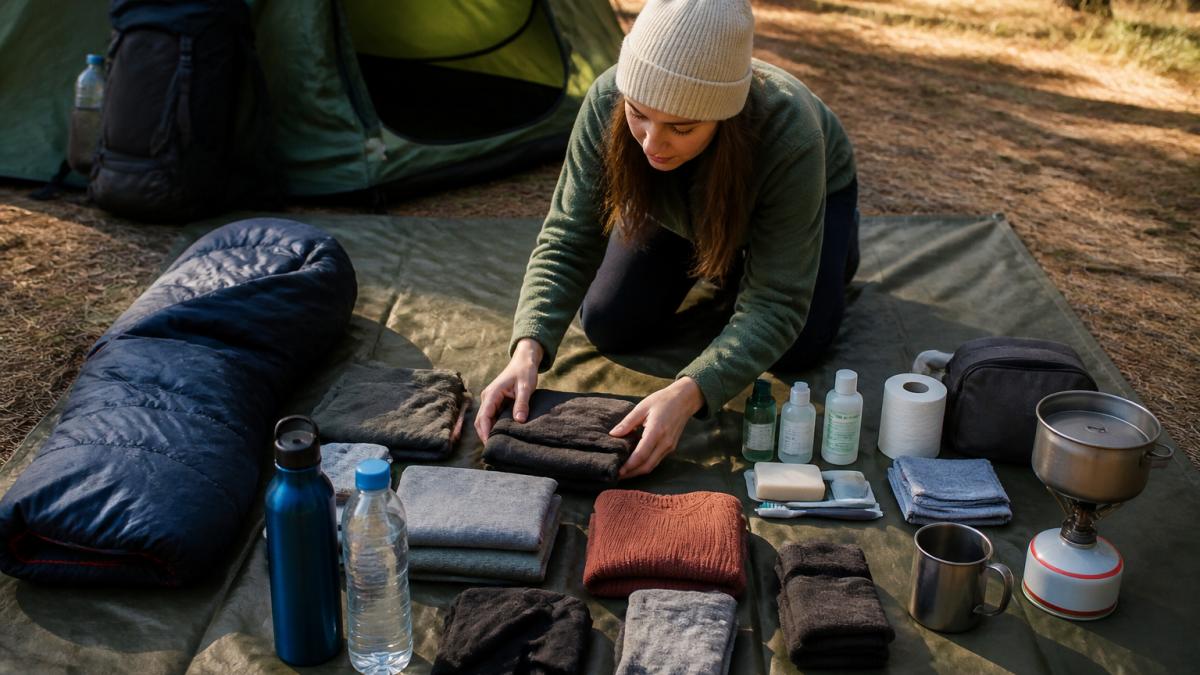
Footwear matters: trainers get wet and stay wet, while hiking boots or trail shoes with good grip keep feet dry and stable on uneven ground.
Water is non-negotiable. Dehydration creeps up on you, especially if you're active or it's warm. Bring at least 2 litres of capacity, more if you're hiking during the day.
Clothing Layers and Footwear
Start with a base layer. Merino wool regulates temperature and doesn't smell even after days of wear, but synthetic is cheaper and works well too.
Your mid layer is a fleece or wool jumper: fleece is light and packable, wool warmer and more durable.
Your outer layer is a waterproof jacket and trousers. Look for taped seams and a hood that fits over your head torch.
Waterproof hiking boots are the standard, lasting several seasons with care. Cheaper options exist, but wet feet in cold weather lead to blisters and misery.
Drinking Water and Water Containers
Tap water at UK campsites is usually safe, but carrying your own means you're not dependent on finding a tap.
If you're camping wild or near a stream, water purification tablets are a lightweight backup. A WHO guidance on water safety confirms that purification tablets are effective for most pathogens found in natural water sources.
Fill your water bottle at camp, not on the trail. Carrying water adds weight, so most campers fill up once or twice a day and ration it.
Camping Cooking Equipment and Camp Kitchen Setup
You don't need a full kitchen at camp. A simple stove, one pot, and basic cutlery cover most trips, enough to boil water for tea and cook simple food like pasta or rice.
A portable camp stove runs on butane cartridges or liquid fuel. Butane is convenient, lightweight, and works down to about 0°C; liquid fuel is heavier but reliable in extreme cold and at altitude.
Cookware should be lightweight and durable. A single 1-2 litre pot covers boiling water and one-pot meals; a frying pan is optional but useful for bacon or eggs.
Stove, Cookware, Cutlery and Dishes
A camp stove with a butane cartridge weighs under 200 g, and boils a litre of water in 5-10 minutes.
A 1.5 litre pot and a 25 cm frying pan cover most cooking.
Bring one set of cutlery, plates, and cups per person. Lightweight camping cutlery is cheap, bowls are more versatile than plates, and enamel mugs are durable while plastic is lighter.
For washing up, bring biodegradable soap and a cloth, wash dishes away from your water source, and let them air-dry.
Camping Safety Essentials and Emergency Kit
Safety gear doesn't take much space but makes a real difference.
A headtorch or lantern is essential for navigating or cooking in the dark.
Bring midge repellent in summer and autumn, a small roll of duct tape for repairs, and spare batteries plus a lighter or matches.
Tell someone where you're going and when you expect to return. Campsite staff can raise the alarm if you don't check out; wild camping requires more caution, so use a personal locator beacon or satellite communicator in remote areas.
Budget Tiers: What to Buy, Borrow or Substitute
You don't need to spend hundreds on your first trip. Budget tiers help you prioritize.
Tier 1: Absolute Essentials (£80-£120) Tent, sleeping bag, sleeping mat, stove, pot, cutlery, plates, torch, water container.
Tier 2: Comfort Upgrades (add £50-£100) Add a pillow, camp bed, frying pan, insect repellent, and a better headtorch.
Tier 3: Specialist Gear (add £100+) Four-season tent, premium sleeping bag for extreme cold, repair kit, navigation gear, and emergency communication.
Borrowing and Substituting Borrow a tent for your first trip if you can.
Frequently Asked Questions
What camping gear is truly essential for a beginner?
Essential camping gear for beginners centres on shelter, sleep, cooking, water and safety. A tent with a flysheet and groundsheet, a sleeping bag matched to season, a sleeping mat, a camping stove, cookware, drinking water containers, basic clothing layers, a head torch, and a first-aid kit form the foundation. Everything else, camp beds, pillows, extra blankets, improves comfort but isn't essential for a weekend trip. Start with these core items and add comfort upgrades after your first few trips.
How do I choose the right sleeping bag temperature rating?
Sleeping bag temperature ratings indicate the lowest temperature at which the bag will keep you warm. For spring and autumn camping, a bag rated to 5-10°C works well. Summer trips need a lighter rating (15-20°C), while winter and Scottish highlands require 0°C or lower. Always choose a bag rated for the coldest month you'll camp in, not the average. A bag that's too warm for the season wastes weight and money; one that's too cold ruins your trip.
What should I pack for my first camping trip checklist?
A beginner camping checklist includes: tent, sleeping bag, sleeping mat, backpack (36-55L), head torch, camping stove, cookware, plates, cups, cutlery, water bottle, food, clothing layers, socks, footwear, toiletries, sun protection, insect protection, first-aid kit, repair items (duct tape, spare tent pegs), and trash bags. Pitch your tent at home once before the trip so you know how it assembles. Test your stove and check all zips and seams. This checklist covers weekend trips; longer expeditions need additional water containers and food.
Can I borrow or substitute expensive camping gear as a beginner?
Yes. Borrow a tent and sleeping bag from friends for your first trip to test whether camping suits you before investing. Substitute a regular pillow for a camping pillow, use a thick jumper instead of a camp blanket, and wear everyday trainers instead of hiking boots initially. However, don't compromise on a sleeping mat, it insulates you from ground cold and costs around £30. Once you've camped twice, invest in your own tent and sleeping bag; quality versions last years and justify the cost.
What are the most common mistakes beginners make with camping gear?
Beginners often buy summer tents that leak in rain, choose sleeping bags rated too warm for the season, pack too much weight, skip a sleeping mat (causing cold nights), and forget spare tent pegs. They also buy full-size cookware instead of compact camping sets, forget to test gear at home, and overpack clothing. Avoid these by checking tent waterproofing specs (5,000 mm flysheet minimum), matching sleeping bag ratings to your season, and setting up your tent in the garden before your trip.
How do I know if a tent is suitable for British weather?
A tent suitable for British weather has a flysheet rated at least 5,000 mm waterproof (measured in mm of water column), a groundsheet rated 7,000 mm or higher, and ventilation panels to reduce condensation. Aluminium alloy poles are more durable than fibreglass. A two-person tent should have a pitched entrance (not just a door) to shed rain, and seams should be sealed. Test the tent at home in light rain before your trip. Budget tents marketed as summer tents often fail in British autumn showers; choose one rated for year-round use.
What lighting do I need for camping?
A rechargeable LED head torch is the priority, it frees both hands for setting up camp and cooking. A head torch with multiple modes (main beam, auxiliary, power-saving and red-light mode for night vision) costs around £27 and suits most camping trips. A backup torch or lantern is useful for the tent. Red-light modes preserve your night vision and don't disturb sleeping neighbours. Test your torch's battery life before the trip and carry spare batteries or a charging cable if it's rechargeable.


